

No charge leveled against individualist, pro-capitalist classical liberalism has been less deserved or more enduring than the charge of heartless Social Darwinism. The absurdity of it is obvious after a few moments’ thought.
Charles Darwin’s findings on natural selection described the “struggle for life” among the lower animals, which must essentially adapt themselves to their environment as they find it. (Some species instinctively make limited, repetitive modifications.) In contrast, in a capitalist society, competition turns from a life-and-death contest among consumers to a creative contest among producers who change the environment in their quest for consumers’ freely chosen custom.
If you don’t grasp the implications of that radical change, contemplate what economist Ludwig von Mises wrote in Human Action: “The fact that my fellow man wants to acquire shoes as I do, does not make it harder for me to get shoes, but easier.” The visually impaired are not abandoned; they Uber over to LensCrafters. The chief struggle in a market-based society is the struggle to win the consumers’ favor better than your competitors. Mass consumption, the result of mass production, became a reality for the first time with the advent of capitalism, an odd outcome indeed for Social Darwinism. The penalty for losing a contest was not death or slavery. At worst, you had to find a job. But many a risk-taking organizer lifted himself up, brushed himself off, and started all over again.
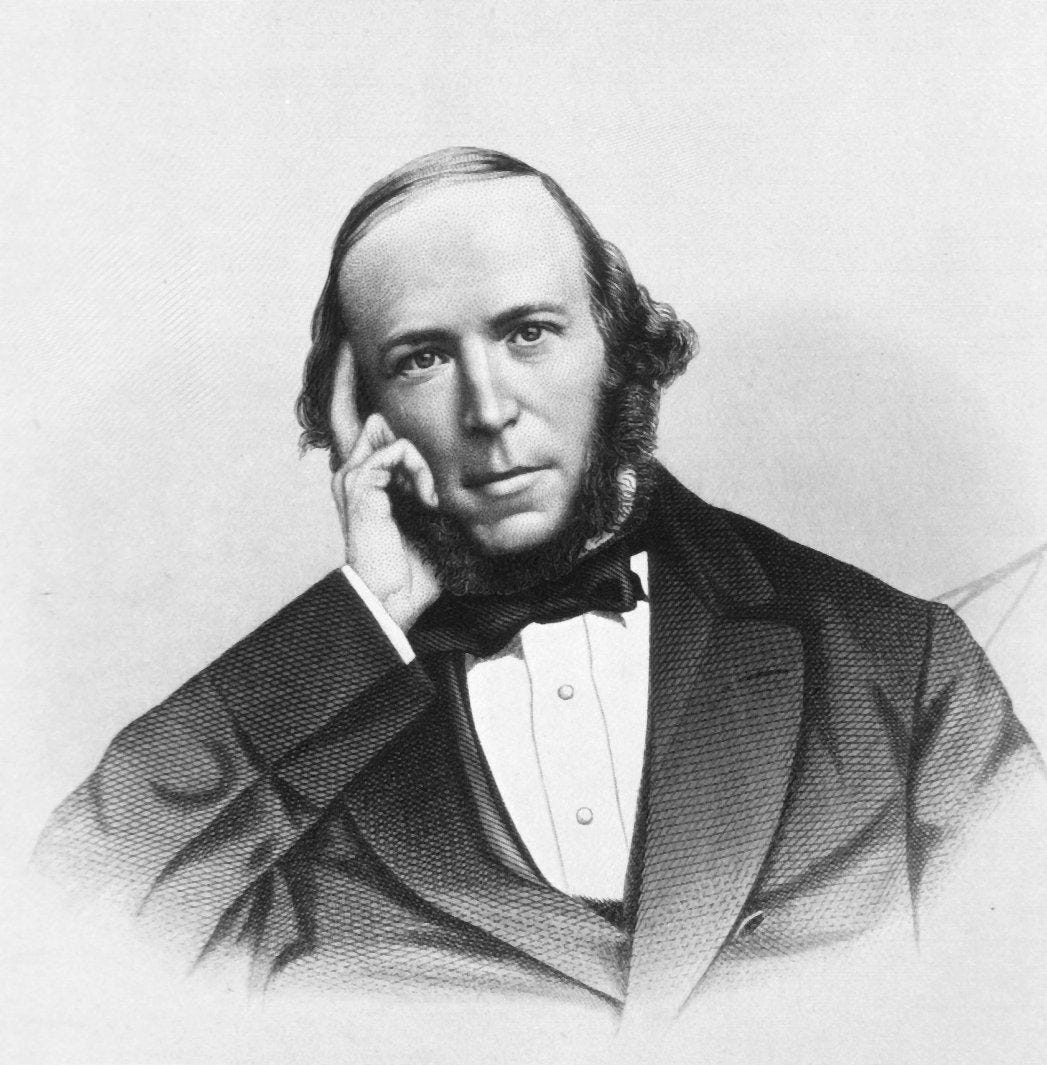
No one has been so tarred with the Social Darwinist smear as the philosopher, sociologist, biologist, and radical liberal Herbert Spencer (1820-1903). Spencer believed that in the “industrial type of society,” which evolved from the illiberal “militant type,” some people would be “fitter” than others. In 1864 the term “survival of the fittest” appeared in his work, but he understood that under industrialism (capitalism), literal survival was not the issue; rather, success was. Nevertheless, this has given him a bad reputation among intellectuals that survives to this day.
In fact, “fitness” would matter in any social or natural environment, including socialism. How could it not be? The term “fitness” is descriptive, not normative. It refers to appropriateness to the prevailing conditions. Fish are fit to live underwater; people are unfit in that regard. That’s not a moral statement. In a society with a pervasive government, those with the predilection, know-how, and time to navigate the halls of power will have an advantage over those (like me) who lack those attributes. In an industrial society, those with the keenest sense of what consumers will want when they see it and how to deliver it cost-effectively will tend to make more money (but not necessarily be happier) than those (like me) without that capacity. Few people could have done what Henry Ford, Steve Jobs, Sam Walton, or Jeff Bezos did.
While Spencer is damned as a champion of Social Darwinism, the term is both odd and deceptive—odd because Spencer set forth his evolutionary outlook before Charles Darwin published On the Origin of Species in 1859, and deceptive because it is untrue. Spencer did not believe that, for the good of the species, the “unfit” should be left by the wayside. Spencer wrote in The Principles of Sociology:
It must not be inferred that private and voluntary aid to the inferior is negatived, but only public and enforced aid. Whatever effects the sympathies of the better for the worse spontaneously produce, cannot, of course, be interfered with; and will, on the whole, be beneficial. For while, on the average, the better will not carry such efforts so far as to impede their own multiplication, they will carry them far enough to mitigate the ill-fortunes of the worse without helping them to multiply. [Emphasis added.]
As Roderick T. Long has written, “While Spencer opposed tax-funded welfare programs, he strongly supported voluntary charity, and indeed devoted ten [!] chapters of his Principles of Ethics to a discussion of the duty of ‘positive beneficence.’”
You may not like Spencer’s bluntness, but it does not constitute Social Darwinism; he foresaw the harm that the welfare state would wreak from subsidizing poor single motherhood and other forms of irresponsibility. In our time, Charles Murray documented that harm in his book about the failed Great Society, Losing Ground: American Social Policy, 1950-1980.
Here’s another quote from Spencer: “[A]n inevitable trait of the industrial type is the multiplicity and heterogeneity of associations, political, religious, commercial, professional, philanthropic, and social, of all sizes,” (Emphasis added.)
Some Social Darwinist Spencer turned out to be. More to come.
TGIF—The Goal Is Freedom appears on Fridays.