
TGIF: The Declaration
The one and only

As therefore the highest perfection of intellectual nature lies in a careful and constant pursuit of true and solid happiness; so the care of ourselves, that we mistake not imaginary for real happiness, is the necessary foundation of our liberty.
—John Locke, Essay Concerning Human Understanding,1690
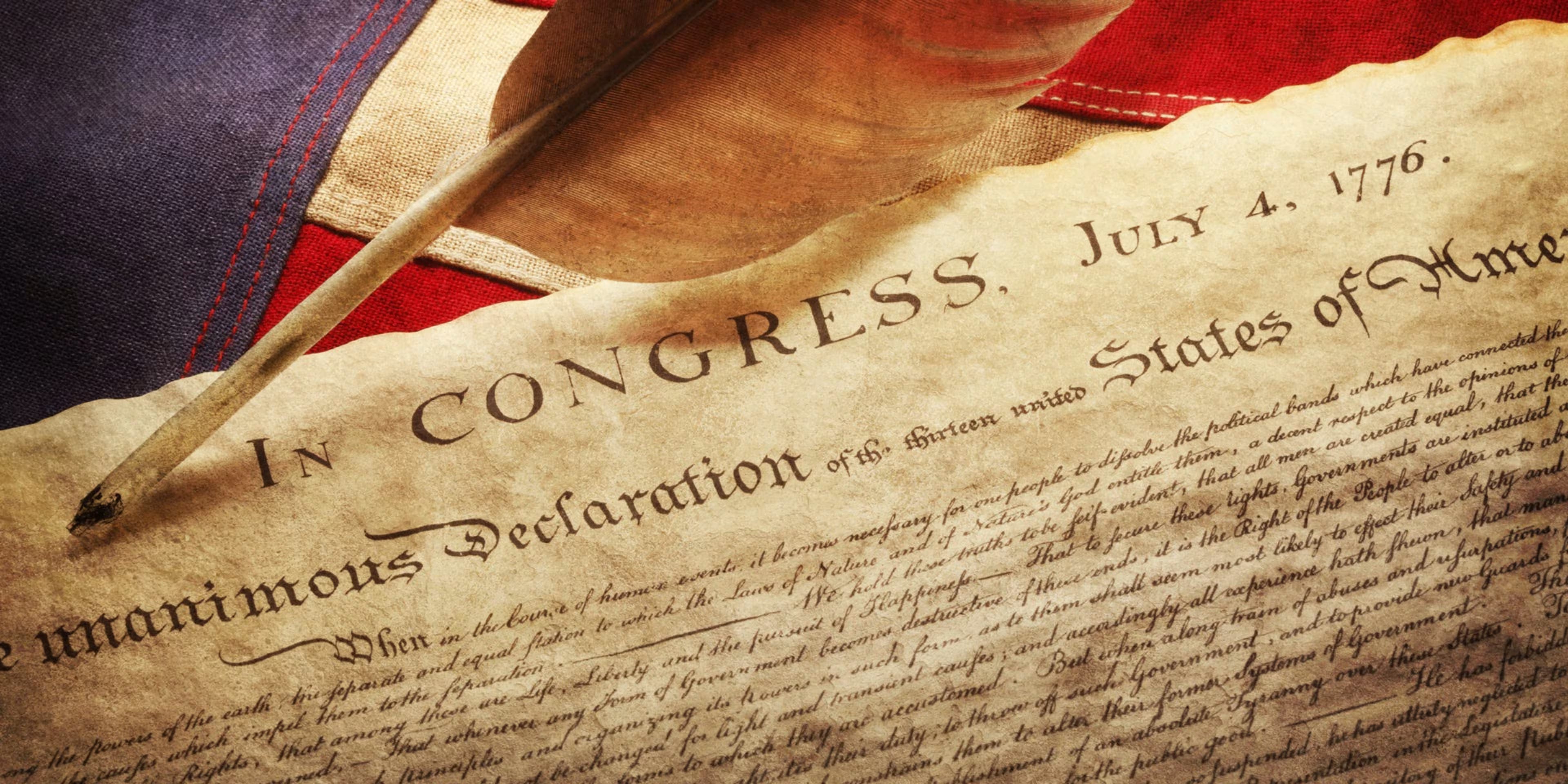
If for no other reason, the 250-year-old Declaration of Independence deserves adoration for its invocation of each individual’s rights to “life, liberty, and the pursuit of happiness.” The significance of that phrase, which overshadows everything else in Thomas Jefferson’s composition (it clarifies the meaning of “all men are created equal”), cannot be exaggerated.
Unfortunately, those words are so familiar—which should have been a good thing—that they long ago blended with the landscape. By and large, people have stopped noticing it and lack appreciation for it. Unlike in the 1700s, it has become a cliché. That’s sad because invisibility helps explain why the government outgrew its intended restraints. (See my America’s Counter-Revolution: The Constitution Revisited.) The fallacy that the government can help some people pursue happiness without violating the rights of others should be obvious. Politicians can give to one only what they take away from another.
Officially, July 4 is Independence Day, which is too bad because it eclipses the deeper libertarian premise of the American Revolution: that the lives of individuals are ends in themselves, requiring no other justification. Americans did not want to be bossed around by a king or a parliament. With the red and blue tribes both threatening individual liberty these days, now is a good time to remember that libertarian premise. The intellectual and literal War for Independence was fundamentally a War for Individual Liberty.
Independence was declared, Jefferson’s document explained, because the king and parliament had become “destructive” of what should have been its purpose: “securing [the] rights” to which it referred. The Declaration could have avoided the individual-rights route and spoken entirely in collectivist terms about the need of the new national entity to rule itself, independent of Great Britain. But it did not.
It could have proclaimed that Americans, as members of a new nation, were obligated to serve that nation. It did not.
It could have proclaimed that among the individual’s rights is the right to pursue the greatest happiness for the greatest number. It did not.
It could have anticipated John Kennedy’s pernicious, un-American, and pro-servitude words, “Ask not what your country can do for you; ask what you can do for your country.” It did not. Those who signed the Declaration said in effect, “Ask neither what your country can do for you nor what you can do for your country. Pursue your happiness, all you individuals, in peace and liberty. Good luck.”
Jefferson’s Locke-inspired phrase could not have been written in an official document before the Renaissance, the Enlightenment, and the Industrial Revolution. It is individualist. It is egoistic. It is 18th-century American. It is the Spirit of 76. It is wonderful, and we should celebrate it!
Lastly, we cannot ignore that some of the champions of liberty and independence hypocritically supported and/or participated in the enslavement of human beings. Slavery was far from unique to America or the West. Virtually every population engaged in conquest and slavery at some point. Yet only fertile Western soil produced an anti-slavery ideology and activism based on the consistent application of Jefferson’s other historic line, “All men are created equal.” Jefferson, inexcusably, never freed his slaves, but we should acknowledge that he had serious moral qualms about that evil institution: "I tremble for my country when I reflect that God is just." Perhaps he planted the equality sentence expecting it to blossom in the future. Shame that it took a war before that could occur.
Happy 4th!
TGIF—The Goal Is Freedom—appears on Fridays.
Very nice. Most Americans walk around as if awake, but are in a kind of deep slumber. They'll cheer as they set off fireworks tomorrow, but will take care to avoid thinking about the original implication of that celebration, and how its meaning has been all but laid to rest in the years since 1776. Perhaps a substantial number will start to wake up as the nation continues the decline that inevitably accompanies the metastasizing cancer of government as it grows and engulfs every aspect of life, but until a critical minority is reached, that will do little to reduce the speed of the slide. I have no solid guess as to how soon we'll reach the bottom or how long a climb back out will take, but it seems quite clear that the bottom will be pretty bad.